


American University: Building a Transatlantic Bridge
The European Union – United States Trade and Technology Council provides a great opportunity for the Transatlantic partners to resolve their disputes. A bilateral approach to this issue will be very effective at tackling the differences between each market.

During the June 15th, 2021 EU-US Summit in Brussels, President Biden pledged, together with the EU, to protect the rules-based order. The stakes were high. In recent years, the US and EU slammed each other with billions of dollars in tariffs, the EU nearly completed an investment deal with China (signed by the Commission but not ratified by the European Parliament), and Germany issued a contract to Gazprom to build the Nord Stream II pipeline.
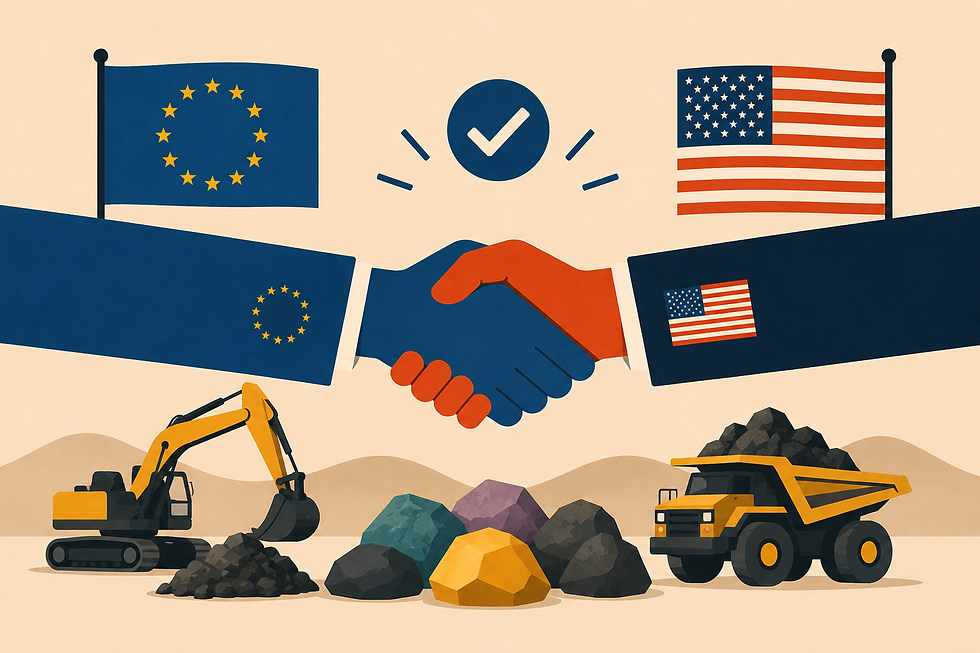
During that June summit, Washington and Brussels created the EU-US Trade and Technology Council (TTC). Co-chaired by the US Secretaries of State and Commerce, the US Trade Representative, and their respective EU counterparts, the council seeks to create trade standards for the two Atlantic powers to bring the two markets closer together. The TTC has already proven itself effective, facilitating compromise to retract the Steel Tariffs and achieve a truce in the Airbus-Boeing case, two enormous issues in international economics. Uniquely, the TTC provides a space for the two allies to negotiate without the legal and political bounds of a World Trade Organization or Organization for Economic Cooperation and Development meeting. The TTC can bridge the differences between the two markets, which could create higher income for both sides. In this text, this article will present the benefits of this new body, and the potential for strategic advantage that multilateralism can provide for the US and the EU.
Read more here.


Comments