


Real Instituto Elcano: Economic Security: a New Age for the EU
The EU is learning the hard way to reduce dependencies on geopolitical rivals, including China and Russia. The allies are taking the first steps in this new geoeconomic reality.

For years, the US had pointed to Germany and other EU member states’ dependence on Russian gas as a source of concern, only to find arguments avoiding that reality, claiming it was not appropriate for the 21st century.
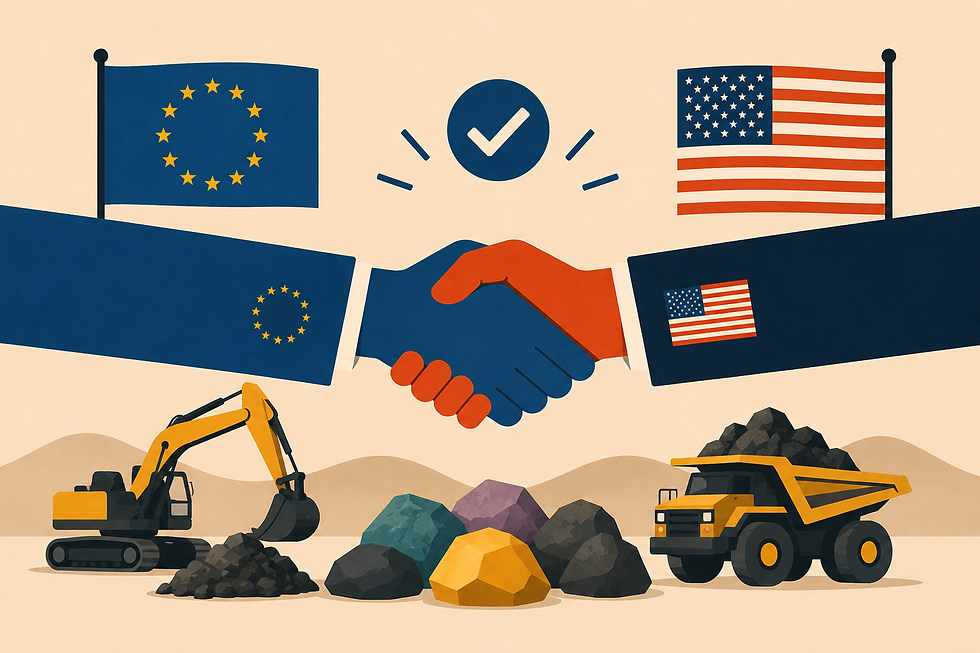
Today, Europe’s leaders are faced with a similar problem: the bloc’s economy is too dependent on China and unreliable countries for strategic supply chains; it must ‘de-risk’. De-risking is a murky term, but Agathe Demarais defines it as the practice that ‘seeks to curb China’s access to top-notch Western innovation, thereby preventing Chinese firms from using Western know-how to climb the innovation ladder’ and that ‘reduces overreliance on China for critical goods’. Critical minerals are just an example, where the EU imports 93% of the annual consumption of these strategic materials from China. The effort, however, is part of a broader strategy to re-energise European industry and innovation while advancing the goals of the green transition.
To analyse current EU policy, however, it must be realised that ‘de-risking’ is very new to it as an institution. The EU was created on the basis that great power competition was harmful to the world and that increased economic cooperation and links were guarantors of peace.
Read more here.


Comments